Assessment in Cedar Grove
Book a Mold Inspection in Cedar Grove: Start With the Slope Behind the House
Air samples tell you what is floating around, not where the water is getting in. Book an assessor to read the uphill wall and the slope above your Cedar Grove house first.
Survey first in Cedar Grove: $100 off your first job in Cedar Grove, credited by us once it is booked.
We help you book a moisture and mold assessment first, then a separate company for any cleanup or drying, starting uphill of the stain.
The Uphill Side promise
- Talking to us is free and commits you to nothing.
- We point you uphill of the stain before anyone talks removal.
- Your assessor and your remover will be different companies.
- Your $100 is applied exactly as the offer terms are written.
Every contractor you hire answers to your agreement with them.
Mold Removal Montclair, (315) 640-3590
Read the terms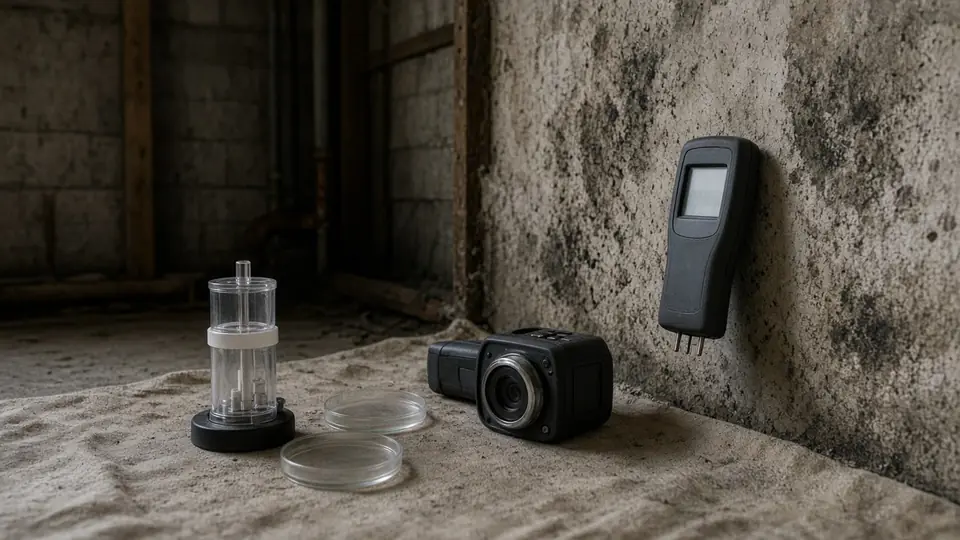
Questions
Fair questions about a moisture survey in Cedar Grove
Do I need air testing for a Cedar Grove basement smell?
Not first. Moisture readings along the uphill wall show whether water is still arriving, and they can be steadier than air samples. Ask for air samples as an extra if you want them.
Can a Cedar Grove assessor tell me which wall is leaking?
A good one reads the walls and the ground outside, and names the likeliest entry point in the written report. Ask for photographs and readings at several points, not one.
My Cedar Grove lot is flat. Do I still need a survey?
Flat ground near a steep slope can still collect water. If the basement smells damp, ask the assessor to check the slope above your lot as well as your own grade.
Signs
When damp in Cedar Grove becomes a case for a moisture survey
- Damp that follows a long rain The township's plan says runoff on steep residential slopes can outrun culverts in prolonged rain. If a wall turns damp days afterward, write down both dates so the assessor can see the lag.
- A musty smell in a finished basement The state health department lists basements among the places where growth goes unnoticed. A smell with no visible stain is a reason to book a survey, not to repaint.
- A wet corner on the uphill side Water can enter at the wall facing higher ground, at a joint or along the floor edge. Mark the spot with tape and photograph it, so the assessor can start there.
- Dampness only early in the year Essex County's plan has water tables peaking as winter ends and spring starts. A pattern that tracks those months can point to water in the soil, not to the air in the room.
Reading the land above your Cedar Grove foundation
Cedar Grove falls about 430 feet from ridge to lowest ground, so most lots lean one way. An assessor should walk the outside first. Which way does the lot tilt, where do the gutters empty, and does the driveway pour toward the house?
Soil maps show Boonton, Haledon and Holyoke units in the township, and USDA says Haledon soil often releases water sideways where a slope breaks. Ask the assessor to explain what they see on your lot, and to hand you the readings in a written report you can pass on to a contractor.
Bring the year the house was built, the months the damp shows, any repairs already made and photographs of the stain taken at different times. Water that hides in a dry week often shows itself in a wet one, so a visit after rain is worth asking for.
What a 1959 block basement in Cedar Grove can hide
The median Cedar Grove house was built in 1959. Block and poured walls from those years do not have to be soaked to cause trouble. Water can travel through mortar joints and along the floor edge, and finished walls hide both.
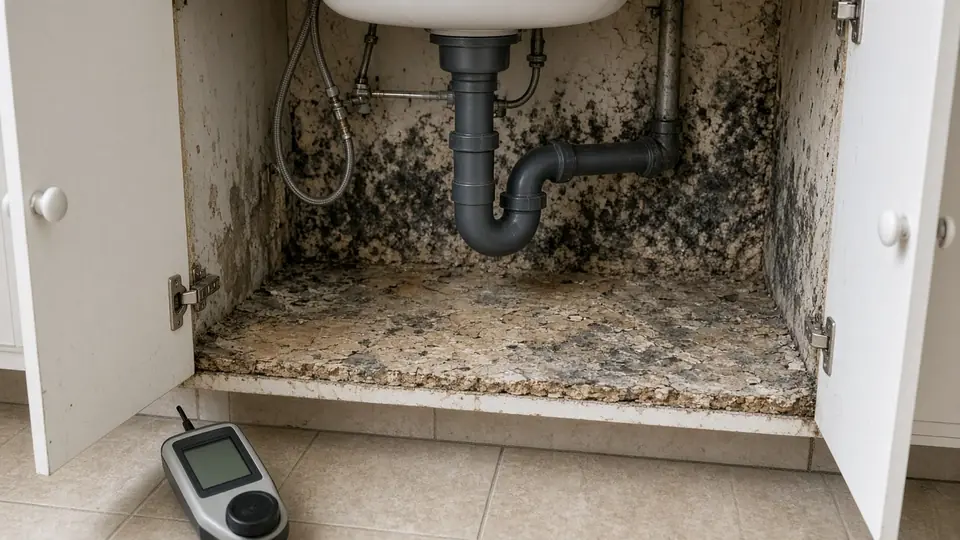
If you finished the basement, tell the assessor what sits behind the drywall and whether insulation was packed against the block. EPA's remediation guide pictures wallboard that looks clean in front and is covered in growth behind, so a survey may need to open one small spot to see the back.
Many houses have also gained a garage, a patio or a retaining wall since they were built, and each of those can steer roof water toward the foundation. Name every addition you know of.
Why air testing comes second on a Cedar Grove job
Air samples change with the weather and the day, and a clean sample does not prove a dry wall. Moisture readings along the uphill wall show whether water is still arriving. Ask for those first, then decide whether you also want air samples. If you do, ask where each sample will be taken and what it will be compared with, because a number with nothing beside it does not help you decide.
The state issues no mold-firm credential, so the questions are yours to ask. What will the assessor measure, how will the report name the entry point, and how soon will it reach you? Then insist that any removal or drying comes from a different business, so the report stays independent of the sale.
Other jobs
If a moisture survey turns out not to fit in Cedar Grove
Nearby
Survey beyond Cedar Grove
Survey first in Cedar Grove: $100 off your first job in Cedar Grove, credited by us once it is booked.