Slope
Mold in Your Montclair Basement? Find Where the Water Gets In
A Montclair wall can stain far from the spot where the water got in. Tell us which wall faces the mountain, and book the survey before anyone tears out drywall.
Montclair owners and renters: $100 off your first job in Montclair, credited by us once it is booked.
We help you book a moisture and mold assessment first, then a separate company for any cleanup or drying, starting uphill of the stain.
The Uphill Side promise
- Talking to us is free and commits you to nothing.
- We point you uphill of the stain before anyone talks removal.
- Your assessor and your remover will be different companies.
- Your $100 is applied exactly as the offer terms are written.
Every contractor you hire answers to your agreement with them.
Mold Removal Montclair, (315) 640-3590
Read the terms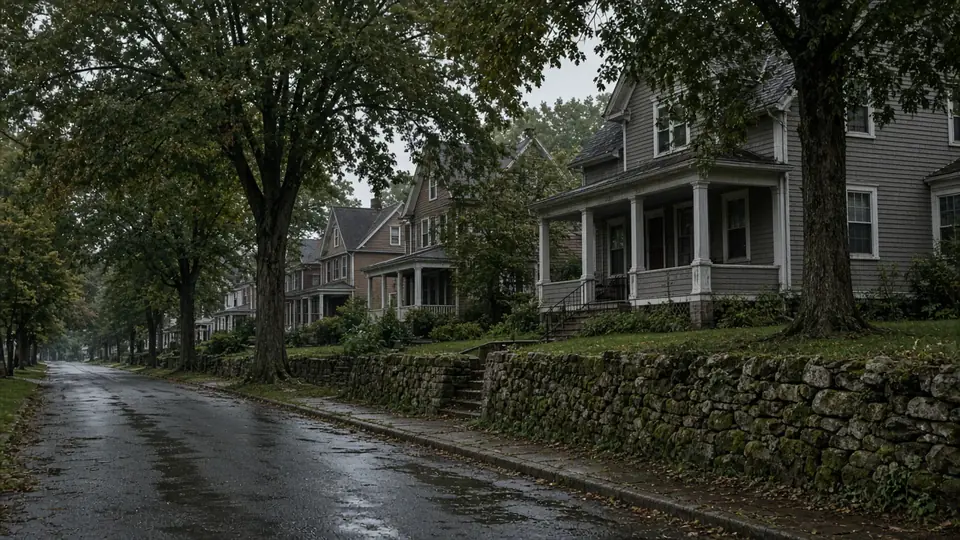
Your slope in Montclair
- 8West OrangeSlope
- 1MontclairSlope
- 2Glen RidgeSlope
- 3BloomfieldValley floor
Questions
What Montclair owners want to know first
Why does my Montclair basement stain on the wall facing the street?
A stain marks where water pools and dries, and that can be far from where it entered. Perched water can move downslope along the rock, so entry can be on the uphill side. Ask the assessor for readings away from the stain.
My street is off the flood map. Can the walls still get wet?
Yes. Of Montclair's 301 paid federal flood claims, 115 came from properties rated outside the mapped hazard area, and 156 are coded as rainfall or snowmelt. So ask about the ground around your house, not only the map line.
Who at the township handles a wet wall?
The Construction Code Enforcing Division handles permits for repair work, and the Engineering Bureau answers floodplain questions. The state health department says a code office can most likely act on leaks, not on mold itself. The township also holds no address-by-address record of flood damage, so your own notes matter.
I rent in Montclair. What can I ask my landlord?
Ask your landlord for the flood rider the state requires at signing or renewal. Put the wet wall in writing, with dates and photos. The state lets a tenant end the lease when the landlord skipped it.
Does New Jersey set rules for mold firms?
Not through a state program. The state runs no certification for mold or indoor air firms. So ask each company what it will write down, and ask for its registration number before you sign.
Which comes first in Montclair, the assessment or the removal?
The assessment. It tells the next company which wall to open and where the water came in. Then you pick a separate remediation or drying company yourself.
Housing
The houses in Montclair
The median Montclair home dates from 1938, and 59.4 percent of its 16,521 units went up before 1940. About 43 percent of households rent, so a good share of these old walls belong to a landlord.
Buying or renting
Buying in Montclair? Ask for the flood notice
A seller must answer the state's flood and seepage questions, and a landlord must hand you a signed flood rider before you sign or renew. The township holds no address-by-address list of past flood damage, so ask for those written answers.
The office
Montclair's building office, and what it handles
- Municipality
- Township of Montclair, Essex County
- Office
- Construction Code Enforcing Division (Construction Official), Chapter 121; floodplain questions go to the Engineering Bureau
The Construction Code Enforcing Division handles permits for the work, and the Engineering Bureau handles floodplain questions. The state health department says a code office can most likely act on leaks, not on mold.
The local job
What makes a wet-wall job different in Montclair
- 1
Ridge
- 2
Shallow rock
- 3
Perched water
- 4
Basalt
- 5
Old foundation
- 6
Uphill wall
- 7
The stain
- 8
Slope break
On a Montclair hillside lot, water can come across the hill, not up from the ground. The township runs from about 195 to 600 feet above sea level, with the First Watchung Mountain along its southern and western edges. Soil maps show Boonton, Haledon and Holyoke units inside the township, and their official descriptions record perched water, sideways seepage and shallow rock. Rain and snowmelt can ride that rock downhill and surface where the slope flattens.
For you, that can mean the wet wall and the entry point are two different places. A stain low on the street side may start at the uphill corner. So walk the uphill wall first, in spring if you can, and write down what you see: the grade, the gutters, the cold spots, the month the damp appears.
Put those notes in your first call. In summer, damp air can also condense on a cold old wall, so say which months the damp shows. If you are in contract on a house, fit the survey inside your inspection window and ask the seller for the state's written answers at once.
A company that asks about the uphill side before it names a price is asking the right question. One that quotes from a photo of the stain is guessing. If a contractor has already quoted a tear-out, ask what showed them where the water gets in.
Old houses, finished basements and many landlords
Most Montclair houses were built before 1940, so the basement walls are old too. A finished basement hides the wall, so ask what sits against the masonry before you accept anyone's diagnosis. Many homes are rented, so the wall you worry about may belong to a landlord. Renters can ask the landlord for the flood rider the state requires at signing or renewal. Buyers can ask the seller to answer the state's flood and seepage questions in writing.
Water also runs under the streets here. The township names six floodplain streams: Toney's, Nishuane, Crescent and Yantacaw Brooks, the Third River and Wigwam Brook. Its engineers say 810 of about 11,000 parcels are in a flood zone, and most of those sit on floodplains that undersized road culverts, or building in a natural floodway, created.
The township also calls stormwater flooding a repeated problem outside the floodplain. So a wet wall does not prove a brook is the cause, and a house off the map can still take water.
Ask any company you call to start on the uphill side and to write down where the water enters. Book the moisture assessment first. Remediation or drying comes from a separate company, and it follows the assessor's written scope. Then have the path the water took repaired, or the wall can wet again next season.
Three jobs
Three jobs for a Montclair house, in the order they run
Three jobs, in this order. The assessment finds the entry point, remediation removes what the survey names, and drying gets wet materials out fast. Pick the one that fits your house, and tell us which wall faces uphill.
Nearby
Other towns on the same slope as Montclair
Montclair owners and renters: $100 off your first job in Montclair, credited by us once it is booked.