Remediation
The survey found mold. Who removes it, and who confirms the job is done?
You have a written plan, or a quote, and a moldy wall in front of you. Before you sign, ask which company wrote the plan and which one will do the work. We help you book a remover who is separate from your assessor. Tell us what the survey found.
We credit $100 on your first booked job in Montclair.
We help you book a moisture and mold assessment first, then a separate company for any cleanup or drying, starting uphill of the stain.
The Uphill Side promise
- Talking to us is free and commits you to nothing.
- We point you uphill of the stain before anyone talks removal.
- Your assessor and your remover will be different companies.
- Your $100 is applied exactly as the offer terms are written.
Every contractor you hire answers to your agreement with them.
Mold Removal Montclair, (315) 640-3590
Read the terms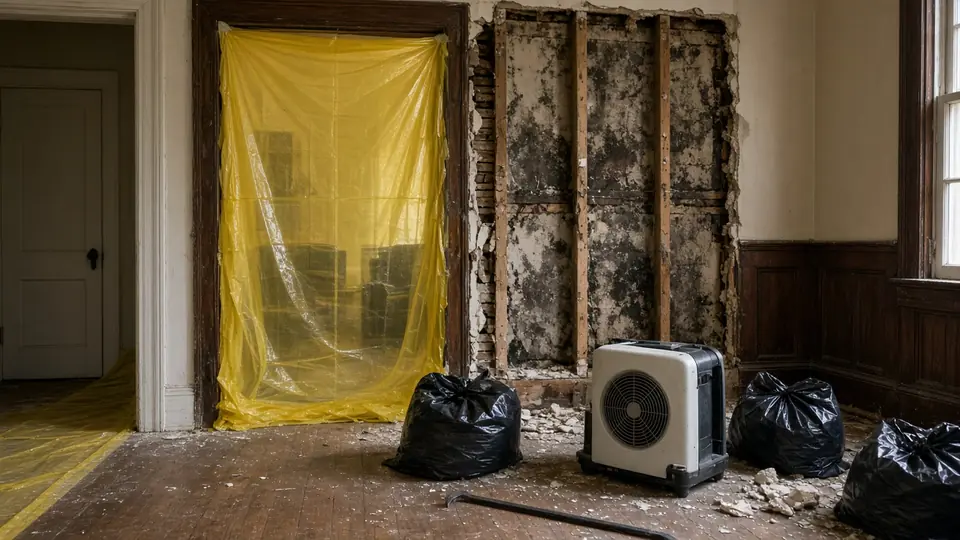
Questions
Settle these before cleanup starts
Should the company that found the mold also remove it?
It is easier to check when they are different companies. The one that finds the problem then has nothing to sell you after the survey. Ask who wrote your plan and who will do the work.
What if the quote arrived before any survey?
Pause before you sign. A quote with no survey behind it prices a guess. Ask where the water gets in, and book an assessment first if nobody has answered.
How should two removal quotes be lined up?
Put them next to the written plan. Check each line for removal, cleaning, rebuilding and drying. A lower total may leave jobs out.
Does removing the mold fix the damp?
No. Removal clears damaged material. The damp returns if the path the water took stays open. Ask who will close it, and when.
Who confirms the finished work?
Arrange that before work starts. The person who wrote the plan is usually the best choice. Put the check in the agreement, with what they will look at.
Will I need to leave the house during the work?
How long you stay out varies by job, so ask when you get the scope. Ask how the remover will wall off the work zone and control the air, and get the answer in writing. If it is vague, ask again before you sign.
Is there a state license I can ask to see?
No. Ask instead about a home improvement registration, a written scope and how the result will be checked.
The four checks
How the four checks shape a cleanup plan
- 1
Which side is uphill
Ask the remover whether the work reaches the uphill wall. Removing the stained section while the entry point stays open invites a repeat in the next wet season.
- 2
When the damp shows
Tell the remover which months the wall was wet. It tells them how long the area was damp, and whether the drying plan matches the cause.
- 3
Bare or finished
A finished wall changes the scope. Ask which layers will come out, which stay, and how the contractor will protect the rooms around the work.
- 4
Under your street
If a brook or culvert runs near the house, say so before work starts. The remover should know the ground will stay wet at times after the job.
The drawing
Closing off the work area
- 1
Barrier
Plastic sheeting separates the work zone from living space.
- 2
Work zone
The one area where marked materials come out.
- 3
Exit route
How bagged material leaves without crossing clean rooms.
- 4
Handback
The point where a separate party checks the result.
Signs
When surface cleaning no longer cuts it
- A survey names affected areas The report lists walls or materials with visible or hidden growth and says what should be removed.
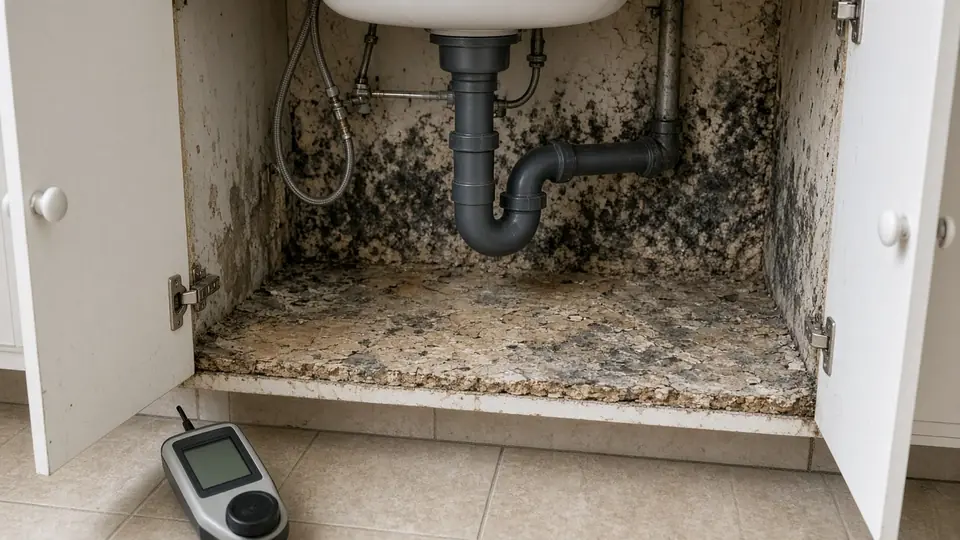
- Mold on drywall or paneling Porous finishes can hold growth that cleaning will not reach. The plan should say what is replaced.
- Readings stay high after a repair If the wall is still wet, removal alone will not last. Ask for drying to be part of the plan.
- A quote with no plan attached A price should point to written scope. If it does not, ask for the scope before the price.
- A wall that looks clean from the front The EPA shows wallboard clean in front and covered with mold behind. Looks alone can mislead you.
Scope
What a written cleanup plan covers
- Containment Plastic barriers and controlled airflow isolate the work zone from your living space.
- Removal of damaged materials The company takes out the materials the plan marks, and bags them before they leave the work zone.
- Cleaning of what stays Surfaces the plan keeps are cleaned to the standard the plan sets.
- Dry-out before rebuilding Materials are dry before anything new is installed, or the problem comes back.
- A handback for checking The work area is handed back so a separate party can confirm the result.
Run of work
How a cleanup runs
- Pull together the plan Collect the survey and any quotes you already hold.
- Ask three companies for scopes Give each one the same written plan, and ask for the scope in writing.
- Choose one Compare scopes before totals. Pick the company yourself.
- Book the result check Arrange the recheck before work starts, so it is already in the agreement.
Where you are
Three jobs, in this order
- 1
Survey the uphill side
An assessor finds the entry point before the stain.
- 2
Remove what is damaged
- 3
Dry and fix the path
Dry the wall, then close the route the water took.
Ask for the scope before you ask for the price
A remover prices what the plan says. If the plan is vague, the price is a guess, and a guess often grows once walls are open. Give every company the same written plan and ask each for a scope that matches it item by item.
Then lay the scopes side by side. One may include rebuilding a finished wall. Another may leave it out. The lower total may be the smaller job, so check what each one covers before you compare.
What happens to the path the water took
Removal cleans up after water. It does not stop the water. If the entry point on the uphill side stays open, the next wet season can bring the damp back to the same wall, or to a new one.
Ask the remover plainly how they will hand the area back, and who will deal with the route. That might be a drying company, a masonry company or a landscaper. Write the answer into the agreement so it is not left to memory.
Who confirms the job is done
The company that removes the mold should not be the only one grading its work. Nobody outside the two companies will arrange a second look, so you do.
The cleanest way is to go back to the person who wrote the plan. Ask them to recheck the area against it after the work. Agree on that before the remover starts, and price it into your decision.
Putting the work on paper
Under the Contractors' Registration Act, a home improvement contract above 500 dollars must be written and show the contractor's registration number. The rules also give you three business days to cancel. Ask whether your job falls under that rule.
Whatever the answer, insist on a written scope, written changes and a written result check. If a company will not put them on paper, treat that as an answer too, and call us for another introduction.
Paper
Records to collect when cleanup ends
- A written scope It lists each wall, material and area the company will treat.
- Change orders in writing Any extra work is added on paper before it is done.
- Registration details Ask whether the company holds a New Jersey home improvement registration and whether it applies to your job.
- The result check Name who confirms the work, and what they will look at.
Price
What moves a cleanup quote
- How much material the plan marks for removal
- How much containment the work area needs
- How difficult access is from the street to the basement
- Whether a finished wall must be rebuilt afterward
- How long drying must continue before closing up
- Whether the entry point is fixed in the same visit
Guides
Further reading on cleanup
New Jersey Rules to Ask About Before You Hire
Five papers to ask for before you hire anyone.
What the Paper Should Say Before You Pay for Work
A checklist for the report you are about to pay for.
What Moves the Cost of a Mold Job
Nine things that move the cost, and what to ask.
We credit $100 on your first booked job in Montclair.