Guide
Your rented apartment has a damp wall. What do you do first?
A damp wall in a rental puts you in a tight spot, because you cannot book repairs and the landlord may not agree there is a problem. Start with what you can do alone: write down what you see, find your flood rider, and put your report in writing. Then call us with questions.
Describe your wall to us.
We help you book a moisture and mold assessment first, then a separate company for any cleanup or drying, starting uphill of the stain.
The Uphill Side promise
- Talking to us is free and commits you to nothing.
- We point you uphill of the stain before anyone talks removal.
- Your assessor and your remover will be different companies.
- Your $100 is applied exactly as the offer terms are written.
Every contractor you hire answers to your agreement with them.
Mold Removal Montclair, (315) 640-3590
Read the terms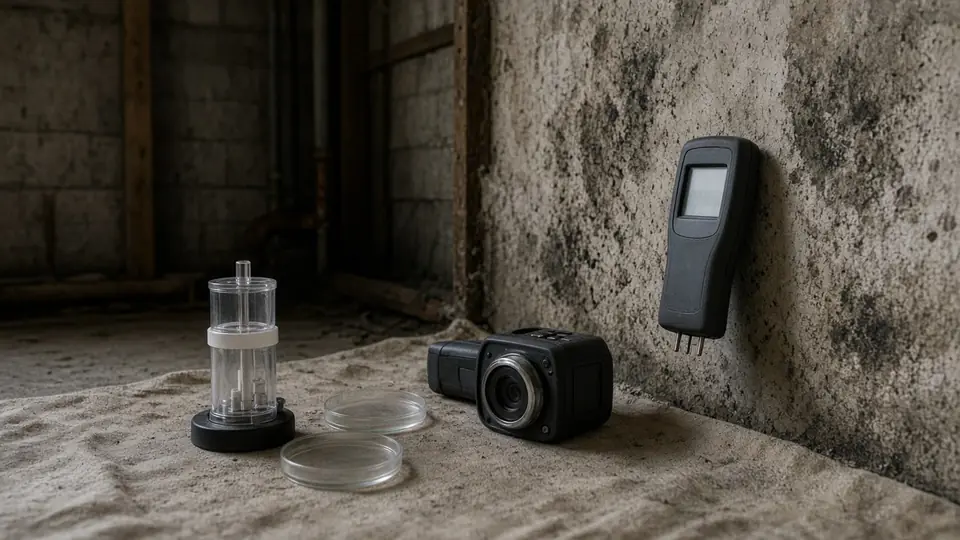
Write about the water, then the mold
A landlord can argue over whether a spot is mold. It is harder to argue with a dated note that says water is entering at a wall. Describe what you see in plain terms. Name the wall, the date, the weather and whether the damp has been there before.
Take photographs with a coin or a ruler beside the damp patch. Take one from the doorway so the whole room is visible. Keep them in a folder with the dates. Each time the damp returns, add to the folder.
Find the flood rider you were given
Before you signed or renewed, your landlord was required to give you a signed rider. Under P.L.2023 c.93 it names any flood zone location and any known flooding. The state's forms became mandatory on March 20, 2024.
Look for your copy now. If you never received one, tell the landlord in writing. A tenant may end the lease if the landlord broke the rule. Ask a tenant advocate or a lawyer what that means for you, because we cannot advise you on it.
Put it in a letter and keep your copy
Send a short message that you can prove you sent. Say what you found, where, and since when. Say that you are worried about water entering the wall, and ask for a visit by a date. You do not need to use technical words.
Do not wait for a reply before you start the folder. If you speak by phone, send a message afterward that sums up what was said.
If your landlord says it is just humidity
Humidity can make a basement wall damp. In a muggy August, warm air can collect on a cool wall with no leak at all. It is not the whole answer if the same wall also turns damp in March.
So write down the months. Damp in late winter and spring can point to water arriving from the ground. Damp only in July and August can point to humid air. Put the months in your message, and ask the landlord to agree to a visit that checks both.
Ask for a humidity reading too. The EPA says indoor humidity should stay below 60 percent, so a number gives you and your landlord something fair to settle the question.
Which office takes a complaint
The state health department tells renters that with no mold regulations, offices can rarely cite an owner over mold, and a town code office can most likely act only on leaks and similar defects. So describe the leak or the seepage, and not only the mold, when you contact your town.
The office differs by town. Montclair's construction code is enforced by a Construction Code Enforcing Division. Clifton is a Passaic County city with its own Building Department. Ask the town clerk which office takes the call where you live, but send your landlord your written report first.
If you live below grade
Many Montclair rentals sit in older houses with finished basements. A below-grade unit may feel it first when water crosses the hill on the uphill side. Note which wall faces the higher ground, and in which months the damp shows.
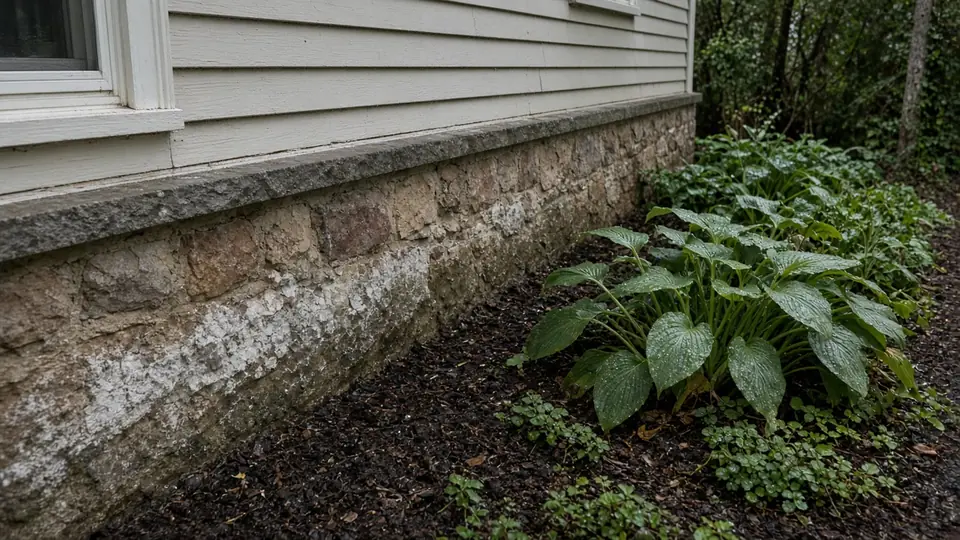
Those two facts help whoever visits. They also help the landlord decide whether the cause is the building or how the unit is used. Give both in your first message.
What hides behind a finished wall
Many rented basements have paneling or drywall over masonry. The state health department warns that mold can go unnoticed behind walls and in basements.
You cannot open the wall yourself without the landlord's consent. Ask in your message whether the assessor may open a small section, and who patches it. Put the answer in writing.
If the landlord sends a remover first
Sometimes a landlord books a remover straight away. That can be fine, but ask what the remover was told about where the water gets in. Ask whether anyone checked the uphill side of the building. A removal with no survey behind it may treat the stain and leave the route open.
You are allowed to ask these questions. Put them in an email and keep the reply with your folder.
Before you pay for anything yourself
It is tempting to buy a dehumidifier, a test kit or a can of sealer. A dehumidifier is cheap and may help in a muggy August. It does little for water arriving along the slope in March, and it will not tell your landlord where the water gets in.
Keep receipts if you do buy something, and mention it in your message. Do not alter the wall or move out belongings in a way that hides evidence before someone has looked.
If a neighbor in the building has the same problem
Ask whether the damp shows on the same side of the building as yours. Several units wet on the uphill side can point to a building-wide route, not to your habits. Share your notes with them, and consider sending one message from several tenants.
A landlord reads a pattern differently from a single complaint. It is also easier to book one survey for the whole building than separate visits.
Before you sign anything new
A landlord may offer a new lease clause, a release or a repair agreement while the damp is still unresolved. Read it slowly. Do not sign a release of claims until you understand what it gives up.
If you are unsure, ask a tenant advocate or a lawyer to read it first. A short delay costs little, and your folder of dated notes stays useful whichever way the talks go.
What a good first visit looks like
The visitor should start outside, on the side of the building that faces the higher ground. They should look at the grade, the downspouts and the wall from the outside before they come in. Inside, they should take readings along the damp wall and mark them on a sketch.
Ask whether the visit will include the neighboring units on the same side. If the visitor only photographs your stain and leaves, ask for a second visit. A written note after the visit is the thing you will need most.
Where we fit in
We are no lawyer, and we do none of the contracting work. Our part is booking a moisture assessment and telling you what to ask the assessor and the remover. If you are the renter, ask your landlord to agree to the visit first. We will explain the questions to ask.
Next
Jobs this guide leads to
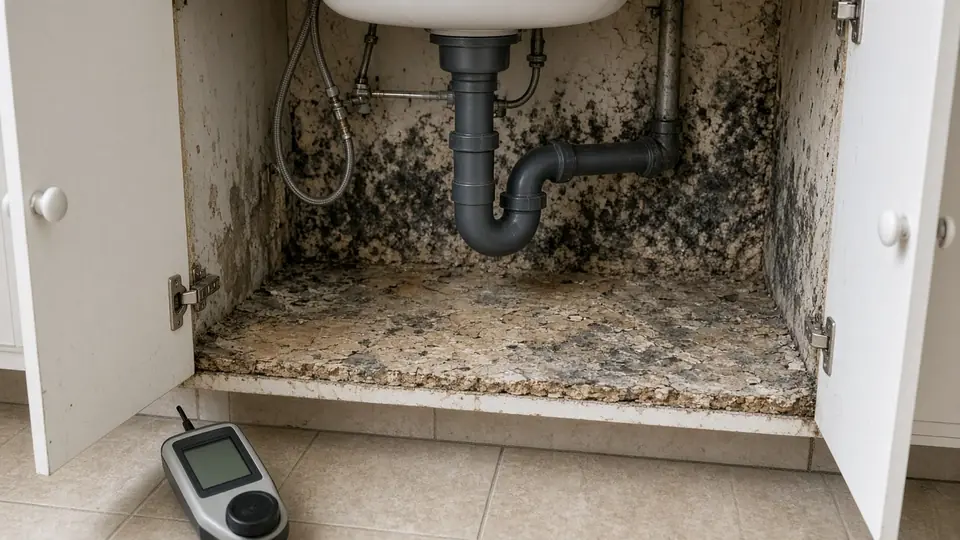
Describe your wall to us.