Assessment in West Orange
Book a Mold Inspection in West Orange, Where Mountain Ground Meets the Basin
Where your West Orange house sits on the slope changes where water gets in. Book an assessor to read the uphill wall and the ground around it before anyone tests air or opens a wall.
Survey first in West Orange: $100 off your first job in West Orange, credited by us once it is booked.
We help you book a moisture and mold assessment first, then a separate company for any cleanup or drying, starting uphill of the stain.
The Uphill Side promise
- Talking to us is free and commits you to nothing.
- We point you uphill of the stain before anyone talks removal.
- Your assessor and your remover will be different companies.
- Your $100 is applied exactly as the offer terms are written.
Every contractor you hire answers to your agreement with them.
Mold Removal Montclair, (315) 640-3590
Read the terms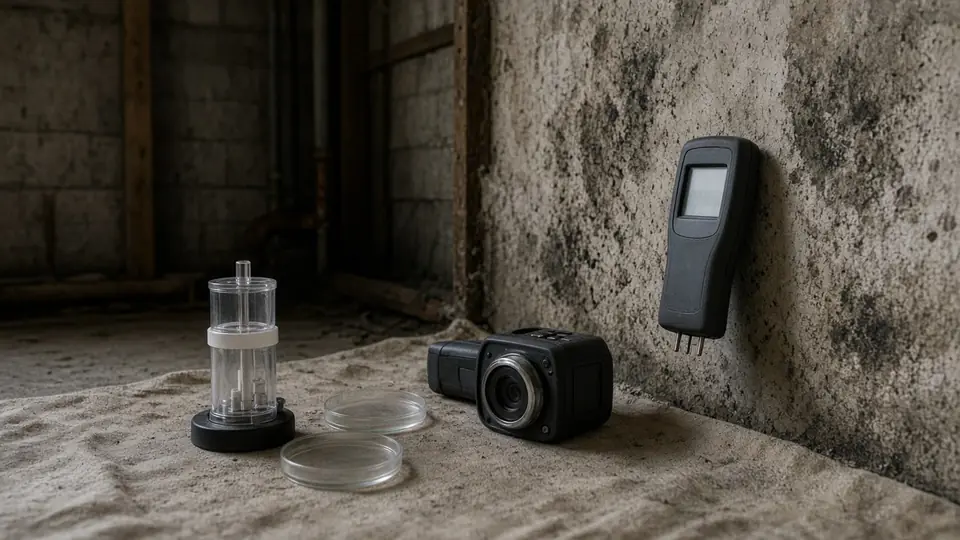
Questions
West Orange basics on a moisture survey
Does my West Orange house being on a slope matter for mold?
Yes, because the slope tells you which wall water reaches first. Ask the assessor to read the uphill wall and the ground outside, not only the room where you see the stain.
Will a West Orange assessor test for mold spores?
That is up to you and the assessor. Moisture readings come first because they show whether water is still arriving. Air samples change from day to day.
Can I book a West Orange assessment while renting?
Tell your landlord first, in writing, and share the report with them. Ask permission to book, or ask them to book it, so the findings carry weight.
I am buying a West Orange house. Should I test first?
Book the moisture survey first, inside your inspection window, and bring the inspector's photos of the stain. Add air samples if you want them. Ask the seller for the state's written seepage answers at the same time.
Signs
West Orange: the clues that lead to a moisture survey
- A stain on the wall facing the street The stain may sit far from the entry point. Work out which wall faces higher ground, and have the assessor take readings there as well as at the mark.
- Dampness that peaks in late winter A wall that turns damp each March can suggest water in the soil, not humid air. Keep a calendar or phone note of the months, over a full year if you can, and give it to the assessor.
- Rock outcrop or a slope behind the house Soil maps list rock outcrop in the township. Shallow rock can turn water sideways toward a foundation, so tell the assessor what rises behind your lot, whether that is a hillside, a rock face or a neighbor's higher yard.
- A finished basement that smells but looks fine Growth can sit unseen in a finished basement, as the health department notes. A smell with no stain still calls for readings, taken before anyone reaches for a paint roller.
Reading the break between West Orange's mountain and basin
West Orange runs from about 140 to about 640 feet. An assessor should note where your house sits: on the high ground, on the slope or at the low edge. A good survey names which one is yours.
Ask for readings at the foot of the uphill wall as well as at the stain. Request a written report that points to the likeliest way in, with photographs showing where each reading was taken. That gives you something to hand a contractor, and something to compare against after the fix. Have the assessor say why that wall was chosen and not another.
If your house is near the low edge, mention that too, because water there may collect instead of cross. The assessor will treat a basement at the foot of a slope differently from one near the crest.
What West Orange's 1956 median house and rock soils mean for the survey
The median West Orange home was built in 1956, and roughly a quarter of the housing is from 1939 or before. If the basement is finished, say so, because the wall behind the finish is part of the survey.
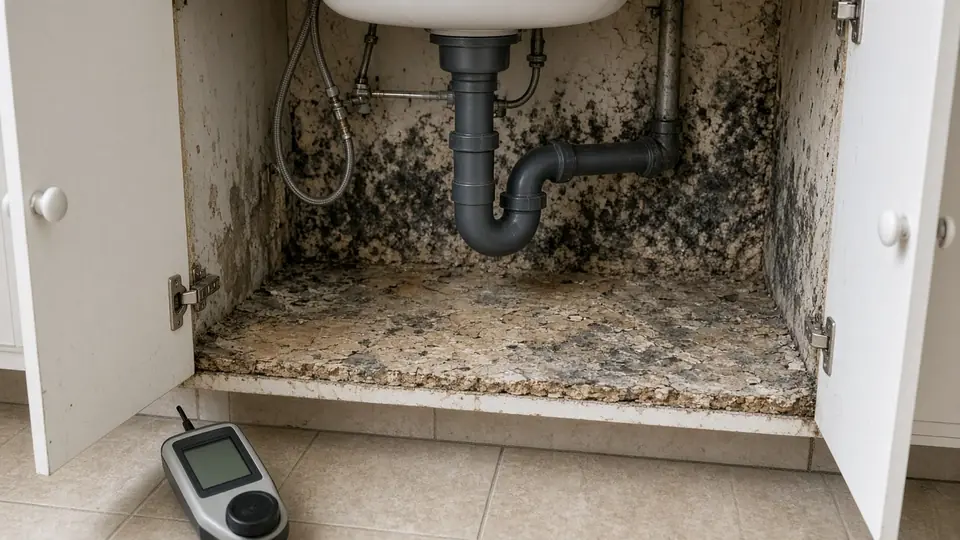
Soils that hold perched water over shallow rock are mapped in the township. Tell the assessor when the house was built, whether the basement was finished and whether the grading outside has changed since. Any work done in the yard can alter where the rain goes, so mention a new patio, driveway or retaining wall.
If a neighbor above you has regraded or paved, mention that as well. The survey is about water, and water does not stop at a property line.
Questions to put to a West Orange assessor
No state credential covers mold firms, so ask what the assessor will measure, how long the visit takes and what the written report will say about the way in.
Ask whether the firm also does removal. Your assessor should not be the company that cleans up, so that a different firm can check the work afterward. Book the survey first, and decide on removal once you hold the report. If the assessor offers to start the cleanup on the same visit, treat that as a reason to compare, not to agree on the spot.
Other jobs
Two other paths a West Orange owner can take
Nearby
Nearby towns that need survey too
Survey first in West Orange: $100 off your first job in West Orange, credited by us once it is booked.